I quit as if I had the privilege
In June 2023 I quit a job as a video editor that paid me $2,500,000 COP. I quit as if I had the privilege to do it, because those of us who came into this world with nothing cannot afford to let go of what keeps us afloat financially to chase a dream. I was terrified of feeling alone and broke, but I was even more terrified that fear would leave me unable to pursue what I really wanted. I felt like I was living my life through duty: studying two degrees, which I wouldn’t wish on anyone, least of all someone poor, and working. And knowing I was stuck in that routine, with a big dream I was doing nothing about, hurt me every day.
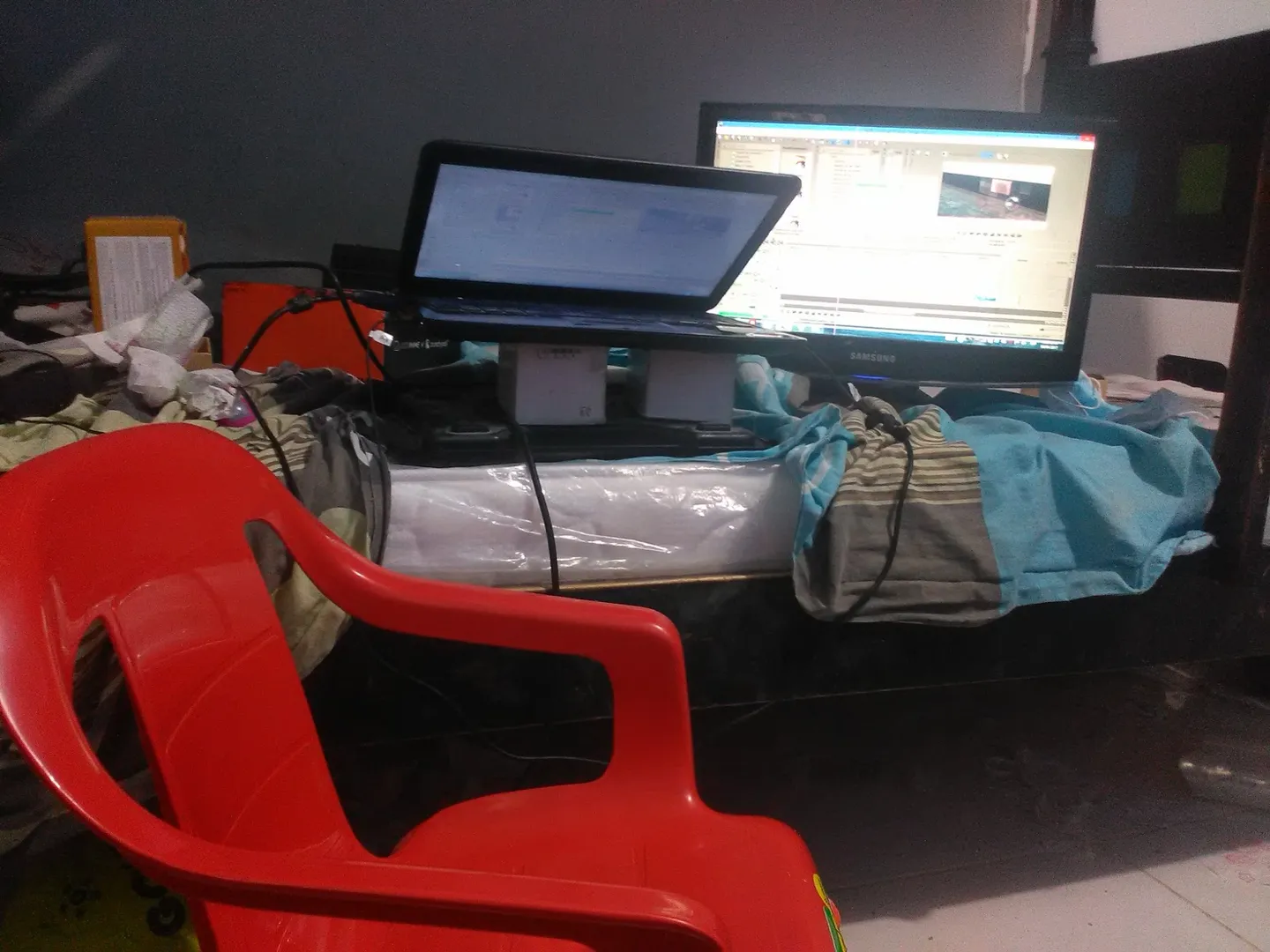
So I spent the following months of my life unemployed, on the few floor tiles of a room in my parents’ house, in the hellish heat of Santa Marta, in a context where they didn’t have work either and scraped by on the odd earnings of a beer stand we had set up at home. I don’t know how I got through the money shortages, the uncertainty and the blows to my self-esteem of those days. You could say I quit to stop waiting, but I ended up waiting even more. How much longer? I had no idea.
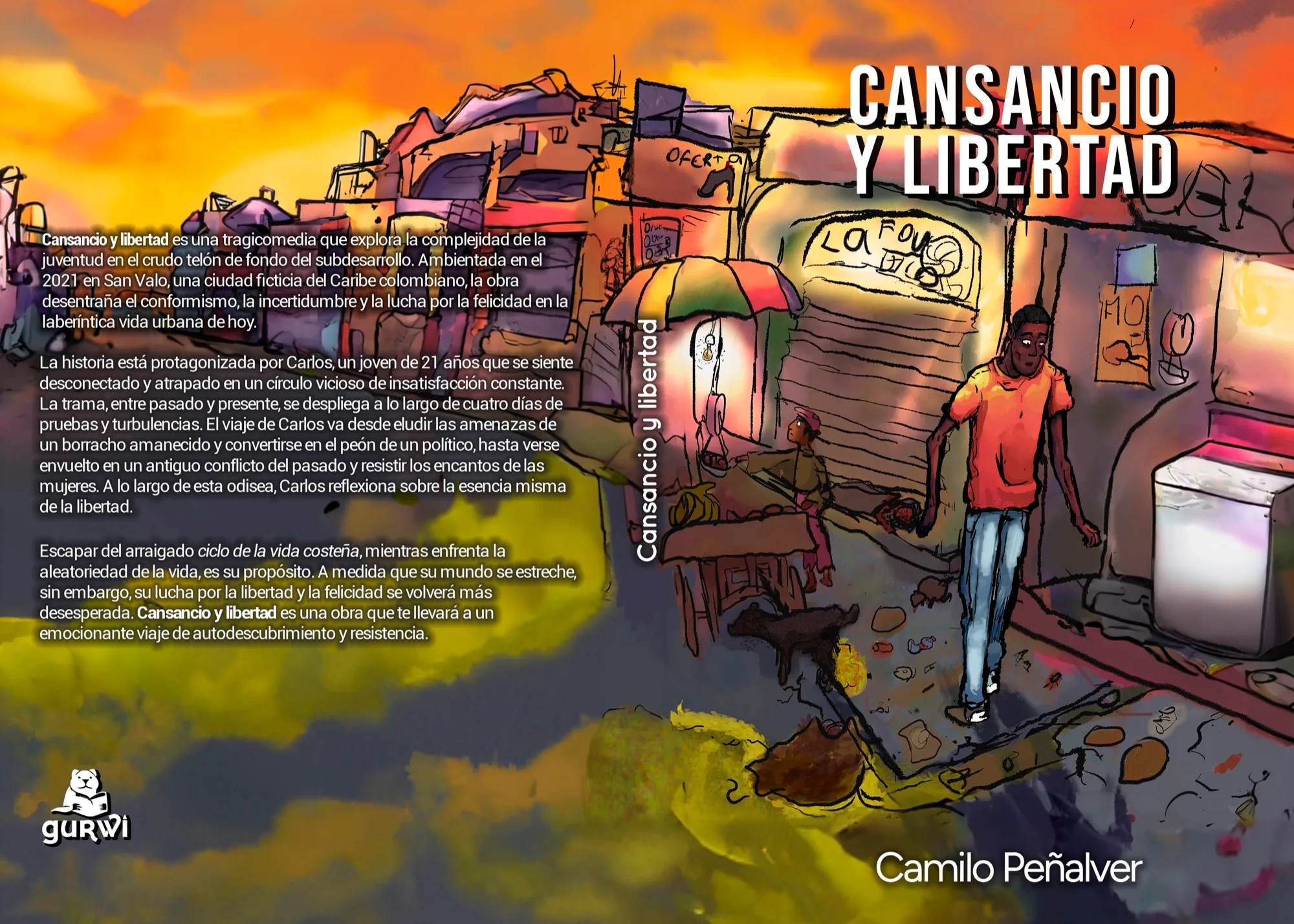
There was little I was sure of. I understood that I wanted to build a tech company that would improve education, reading and the way knowledge is shared, but what I had in my mental draft was an unnecessary Wattpad. That’s why, in the printed edition of my novel Cansancio y libertad (2022), you’ll find one of Gurwi’s first logos, as if it were the responsible publisher.
Regardless of that, if my goal was to build a company, then I first had to learn how one works. So I spent six months locked in my room learning national corporate law, accounting and how our tax system is built. And to make that time count I decided, with my usual Quixotic airs, that I was going to create the best company-formation course in Colombia, one that would do the job the horrible chambers of commerce wouldn’t do.
The chambers of commerce
In Colombia, the chambers of commerce are private entities, supposedly non-profit, that perform public functions and have kept the mercantile registry since 1931, and “in exchange” they charge the annual fee every merchant is obliged to pay. There are 58 of them, and they split the country by jurisdiction, so you don’t choose yours; you get whichever one corresponds to where you live.
My animosity toward the chambers of commerce actually begins one December, when my father, a man with no money, is extorted over the phone by an alleged member of a paramilitary group. My dad gives what he can, which is a million pesos; my mom gets beside herself with worry, and days later they extort him again. In our naivety we fell for it the first time, until we understood they weren’t members of any Gaitanista Self-Defense Force of the Sierra, but common criminals, probably calling from prison, with the chambers of commerce’s databases, which they trade. It’s common in Colombia for someone to incorporate a company and, a few days later, be called to be extorted by a criminal who sounds serious because he has your home address, the one you handed over to the chamber of commerce.
After that anecdote I already had grounds for reluctance that made me even angrier as I understood that the chambers of commerce, in general, only cared that the entrepreneur or business owner renewed their mercantile registration, and that everything else involving legality they left in limbo, exposed to the fangs of the National Tax and Customs Directorate (DIAN). Also, like politicians, they like to pretend they’re doing something while doing nothing, and many of them are family businesses.
If you think about it, too many people in positions of authority repeat that idea of the importance of formalization very irresponsibly. Because being formal in a country of right-wing governments that, for some reason, created an anti-business tax system, being formal without being aware of how much money, work and requirements you need to meet to avoid being wounded by the same system, can be the worst decision you can make. And that’s sad, because we leave entrepreneurs without the asset separation that a legal entity offers and, therefore, without the possibility of receiving investment that goes to Colombian companies and not to foreign companies created by Colombians, as was our case with Gurwi LLC when we won the Shipaton in October 2025.
My third great failure
In January 2024 I started publishing the course, which would take me a couple more months to finish, and I even published a full hour of it for free on YouTube so anyone could verify the quality before paying.
In its entire history, the course has barely generated about $1,300 dollars, so it was clearly an outright economic failure. Yes, the people who took it loved it and gave me enormous words of admiration and gratitude, but words are no way to build a life that moves away from mere subsistence. So with that course I accumulated my third great failure. For a third time, life told me again that this revolutionary idea I had, which was going to have a huge impact, in reality wouldn’t change anything in the world.
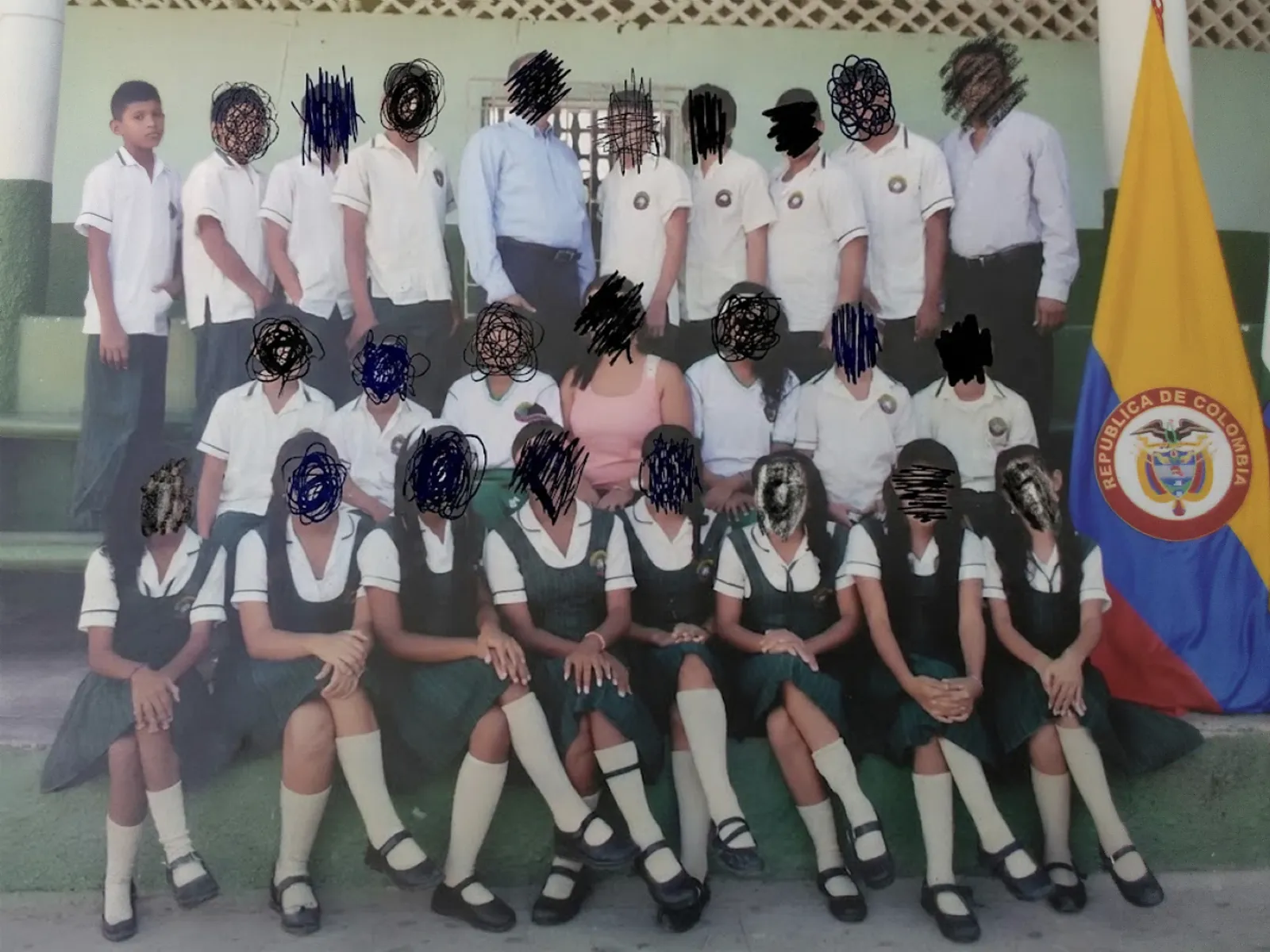
The important context you need about me is that I stuttered and couldn’t pronounce the letter “r” for sixteen years of my life. I come from a lower-middle class family from the Caribbean coast of Colombia, and the poor education I received can be summed up by the fact that my Spanish teacher didn’t know what an indent was.
And because I was very shy and grew up feeling inadequate and afraid that others would hurt me, I spent my childhood and early youth in my room in Riohacha editing videos and chasing a career as an anime YouTuber. I’m very glad I left that path and, at sixteen, decided, because of the lovely book A Little History of the World by Ernst Gombrich, that what I wanted was to read and learn as much as I could, because I was definitely very ignorant.
In this way, I remember how I’ve come to invest my time in things for which I had an aspiration that didn’t solve what one most urgently has to solve when you’re born poor: your finances.
The first was when I became obsessed with making modern music with lyrics and became a great music producer, expert in Ableton, vocal processing and synthesizers. I made tracks that, depending on who listens, are noteworthy, but I understood that the music industry was one of the least meritocratic industries, so there was nothing I could do.
The second was with my novel Cansancio y libertad. I started writing it out of a thesis about the world and how things should be. I noticed that as Latin Americans we don’t have access to stories about our youth, and I felt bad and lost, so I wanted to write one in which the characters lived in the underdeveloped world I live in and spoke and felt like my contemporaries, not like Anglo-Saxons. And the fact that those stories don’t exist is no coincidence, because the Spanish-language publishing market is in the hands of a few international groups that decide what gets published and what doesn’t, and because organizations like the Bogotá Book Fair and the Colombian Book Chamber care little about promoting new national authors, something I had already denounced before as another reflection of this country’s centralism. I’m immensely proud of the result and I think it’s one of the loveliest personal trophies one can have, especially today, when we’ll never again be sure whether something was written by a human or by artificial intelligence. But, again, that didn’t solve my money problems and it kept eroding my self-esteem, because the higher your expectations of something, the harder the falls feel.
The course was the same. A noble problem and intention on my part: that any person like me, without connections, without a family with a business background, could understand the tangles of this whole system. And that I would use all my pedagogical and audiovisual skills to create a course that was easy to understand and very entertaining to watch.
So in 2024 I was a 22-year-old, tired, exhausted, skinny, with no hobbies, who hadn’t enjoyed his life and didn’t know how to enjoy it, because the only thing he had done was work, because he believed in the cycle of the condemned to coastal life, which his novel describes, and he believed that the only noble way to try to escape that cycle was by working a lot, beyond what is human.
The Duolingo for everything
But then the course revealed something to me: if recording and editing had been so difficult and time-consuming for me, the savings of a visual, interactive, text-based platform would be enormous: the costs of getting in front of a camera, recording and editing would disappear.
And the first thing I thought of then wasn’t Duolingo or Encarta (I wasn’t fortunate enough to know what Encarta was before these thoughts; I found out when the older folks in the comments of my videos told me the project reminded them of it). I thought of the book collections I’d read during my reading period: Para principiantes, from the Argentine publisher Era Naciente; For Dummies; 50 ideas you really need to know about, among several others. My premise was: publishers create attractive book collections to make it easier to understand certain topics, but there’s no app that has tried to use technology to follow that same principle. And with these ideas came the obvious comparison: being the Duolingo for everything.
So, without knowing much about programming, nor being good at design, I made a horrible prototype in Figma and published the first video announcing what I wanted Gurwi to be. My pitch back then boiled down to: the mobile app to build a Colombia with more education and less chirretismo (coastal slang for tacky vulgarity).
The video reached more than 250,000 views, 40,000 likes and more than 500 comments from people expressing love for the project and proving that it was worth having an app that teaches what school teaches, which isn’t enough, and what school doesn’t teach and is important for adult life.
An exemplary young man
The video was so successful that the then Minister of ICT, Mauricio Lizcano, saw it and shared a post extending his congratulations. I reacted to that post asking for help. The minister replied on the post and asked me to write to him, but he never answered.
The minister wrote:
Interesante App @camilopenalver Un joven ejemplo de lo que queremos lograr en Colombia con nuestra formación digital gratuita del @Ministerio_TIC ¡Éxitos con Gurwi!
We then had 3 situations:
- A public official who used discursive ambiguity to associate an independent project with the leadership of his ministry, a way of confusing people by taking credit.
- A public official who sees “an exemplary young man” and decides to “leave him to his fate”. What good are words if they don’t lead to action? You can’t eat words!
- An official who then writes “Camilo, of course. Please write to me privately so we can talk about this great initiative and find out which area I can direct you to” and then doesn’t reply.
I had my scruples about whether it was right to talk about the matter publicly and amplify it, but I decided to do it and record a new video commenting on the case. And of course people felt identified and got angry with Lizcano, insulting him with every pejorative, and made him respond.
That video surpassed 100,000 views on TikTok and 50,000 on X, and the minister contacted me again. This time he referred me to someone from his Ministry, María Lucía Flórez Jiménez. A virtual meeting, because why would they fly me to Bogotá; people like us, who show up out of nowhere, aren’t treated so well. The meeting ended with them reviewing what could be done, and in the second meeting the conclusion was nothing, and that they’d end up sending me crappy MinTIC calls, the kind they make in Colombia to give trainings taught by the friends of someone powerful there, which are useless.
The ten million that came from a stranger
On social media I kept sharing my process of building the app, which would take quite a while to finish. Making videos wasn’t comfortable for me. If you’re doing something big that requires concentration, there’s little time left to record and edit yourself.
In one of those videos I told the story of my application to the SENA’s Fondo Emprender. The Fondo Emprender is the only national public call that offers non-reimbursable capital for entrepreneurship. The rest of the calls are about training with experts probably incapable of advising all the types of businesses that exist. But the Fondo Emprender had one small flaw: the gigantic corruption of SENA, which I had even denounced before, in a video that got more than 1 million views, but which led to nothing in practice.
That single video in which I told of applying to the Fondo Emprender was especially relevant, not because it reached 128,000 views and kept contributing to keeping the idea of Gurwi in people’s minds, but because it led a Colombian abroad to take notice and want to talk to me. That Colombian, a CEO of a tech company in a Nordic country, after writing to me on Instagram and talking to me for 30 minutes on a call, decided to give me 10 million Colombian pesos to continue the project.
In Colombia the conditions are so miserable that it would take a ton of paperwork and work to win an arts grant for the same amount, and always with the possibility that it was rigged. And I say that because that’s exactly what I won with a lot of paperwork when I was chosen in the unpublished-novel category of the FODCA, a call by my city’s Secretary of Culture, to publish my novel Cansancio y libertad, so my gratitude toward him was intensely gigantic, especially given how big my financial needs were.
That happened in September 2024. And almost a year would pass before Gurwi was first published in August 2025, but I didn’t know it.
I went through a lot of hardship.
Jonnier
I started developing Gurwi in FlutterFlow, a low-code platform for building mobile apps, which lets you do it from a graphical interface and write Flutter/Dart code to extend its capabilities. A platform that today must face problems, because AI got so good at programming that dragging elements and filling in forms to create software is now a bottleneck.
On that path I met Jonnier Martínez, a kid from Palmira, Valle del Cauca, then 19 years old, with a family history of poverty like mine, who joined me to work in exchange for a percentage. Many people wrote to me, and still do, offering their help as developers, but my premise is that human beings are complicated and can hinder things more than they help, and start authorship claims that would take away my freedom over the project.
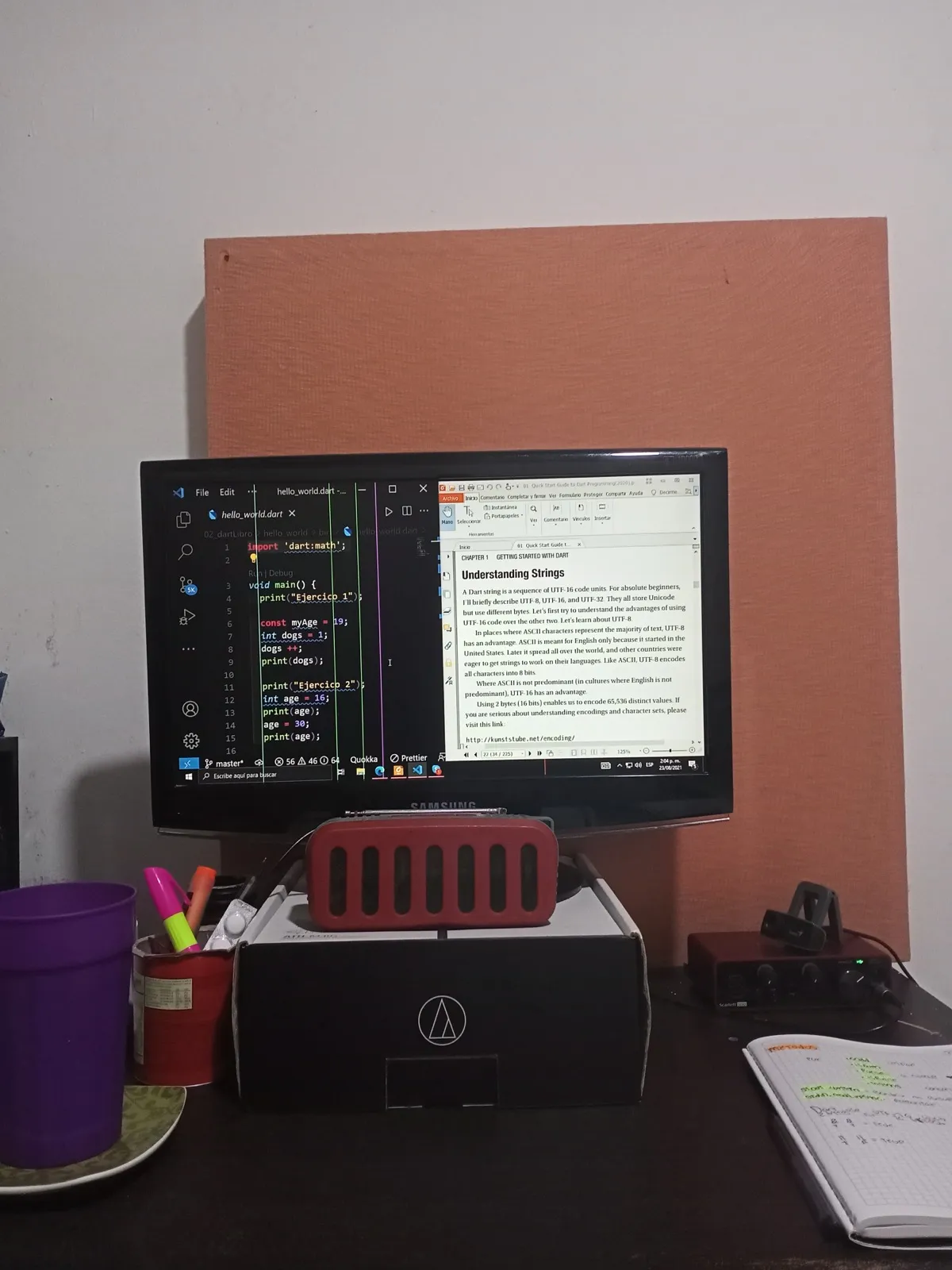
With Jonnier none of that has happened, so I can say Jonnier was the best choice, and thanks to that good and important choice I got the help and knowledge of someone who had been programming longer than me. I had only learned some Dart and Flutter before trying to make the app, reading a couple of books, after a bad experience with JavaScript.
The three calls I lost
But remember I had no job, so I needed money. I tried applying to three calls, as hard as it is to apply to something while building a product and recording videos for social media. I didn’t get into any. The common pattern is that all of them were national.
The first was Desafío Creadores, which ran from June to September 2024, the national call of Nestlé’s Initiative for Young People. You had to upload a one-minute pitch to Instagram tagging @jovenesnestlecol. Of more than 600 projects submitted, 50 moved on to training with the EAN University, seven to the final and three took home $80 million each. My project didn’t make it. And that even though my video was the most viewed of the entire call, by far: more than 60,000 views and 6,000 likes, when the other participants barely surpassed 5,000 views.
The second was the SENA’s Fondo Emprender in September 2024, which rejected my continuation in the program after the first pitch. The reason one of the judges gave was that this was a tech project and that in the past they’d had tech projects that didn’t deliver. In other words, my proposal was judged by other people’s mistakes, and the Fondo Emprender of Magdalena’s criterion ended up being that it wasn’t worth betting on technology. When they tell you no at the Fondo Emprender pitches, you can apply again. The problem is they never notified me to do so. I asked twice by email and the answer was that there were no new open pitch calls. I went twice in person and it was the same.
The third was the 500+ Santa Marta 2024 Stimulus Program for Cultures, Arts and Knowledge, successor to the FODCA under Carlos Pinedo’s government. It was opened on Monday, September 16, 2024, by the Secretary of Culture, Darío José Linero Mejía, and closed on October 1. Two weeks for the city’s cultural sector to play for $1,398 million distributed among 91 stimuli of up to $20 million each. An implementation disaster: minimal deadlines, confusion about how to deliver the documents and, in the end, results notified by email without a scoring rubric and without a single line of justification. No one knew by what criteria a single project was evaluated. No media outlet made a fuss.
Besides these three calls, there were two requests for help that I remember. The first was to Carlos José Jaramillo Ríos, then Secretary of Economic Development and Competitiveness of Santa Marta, who kindly agreed to talk to me, thanks to an acquaintance who introduced me, when the project was in very early stages and the whole Minister of ICT thing had already happened. He promised to send me every call he saw, but he didn’t send me any. And all the while he spent his time on social media talking about supporting entrepreneurship, innovation and young people in Santa Marta, being fully aware that there was a first-rate young, innovative entrepreneur he had spoken with and for whom he did nothing.
Another request for help was to Andrés Bilbao, part of Rappi’s founding team. The first time I saw him was at a Santa Marta Chamber of Commerce event I attended. He presented himself in virtual reality, and I had prepared thinking he’d be there in person, but no. After having watched many of his interviews, back then he was much kinder about the issue of inequality, although later, in his videos, he seemed to express that he completely dismissed it. And there I stood up impulsively, microphone in hand, to tell him I was the kind of crazy person who talks about achieving great things, etcetera. In front of the audience he told me to write to him on LinkedIn, and when I wrote I paid for premium to be able to do it. He didn’t answer. And that was fine. People like him get pitched all the time, and everyone decides who they answer and who they don’t, as long as they’re not performing a public function like Lizcano or Jaramillo, all good.
Months later, with the Shipaton already won, I got a few more seconds of conversation with him. The Bilbaos, who back then wanted to raise 30X, gave a talk about how to apply to YC and opened a Q&A. At the end I spoke for about ten seconds, describing my case and that I didn’t know how to get more recommendations for YC, that I only believed there could be a single person who could recommend me. With that he reacted extremely aggressively. He started by telling me: “Camilo, do you want me to talk to you with the truth or talk to you nicely?”
With that worn-out gringo coach attitude, of someone who believes he has to mistreat people to look good, and who knows he can do it because he’s a person with power, and who also knows that people are tolerant of those with power. The matter ended with him telling me to write to him on LinkedIn, that this time he would answer me, and he didn’t answer.
But the truly interesting thing isn’t that, but that when weeks later he saw that the important journalist Julio Sánchez Cristo dedicated a video to me, he wrote to me on Instagram asking to talk to someone from his team. I thought he had something in mind for me, but the call was a sales call: the person wanted to sell me one of his courses, about $3,500 dollars or so, in which you pay to be scolded.
You can imagine then how bad I felt in 2024, with a dream bigger than me and no money, only the need to keep working to prove whether things work, even though the way I worked and work is something that, for lacking any space for rest, hurts me.
The Shipaton
2025. I had a job, so the financial anxiety was a little less. I also had a girlfriend. Sometimes we broke up and got back together. But what matters to tell happened on July 2, when the Shipaton 2025 was announced: an international mobile app development hackathon, with more than $355,000 dollars in cash prizes across different categories. I found out about the call while scrolling on X, watching the video in which Charlie Chapman, developer advocate at RevenueCat, announced it. Fortunately I had decided to follow the RevenueCat people on X after understanding they were the only option to offer mobile payments in Gurwi. If I hadn’t had a polished algorithm on that social network keeping me updated and connected to what was happening on the other side of the world, I would never have participated in the first place, nor obtained the opportunity I obtained.
When I saw the post I felt it could be the big opportunity we were looking for, but at the same time that it wasn’t, because Gurwi wasn’t ready yet. We had planned to launch the app the following year, and to keep living in poverty for the rest of 2025. Fortunately I made, and we made, the decision to run to have Gurwi ready for the Shipaton.
Here you have to understand that back then Gurwi was two pieces of software: Gurwi Educators, with which we created the classes through a huge, extremely complex editor that allowed us to edit the content, and Gurwi Students (or simply Gurwi), the app everyone knows. After the Shipaton, Gurwi Educators would simply become Gurwi web and we’d completely rebuild that editor, but those are technical complexities that don’t matter now.
The point is we ran. We gave it everything. Me, who am the one-man band that not only programs but sets the strategy, records himself, edits, talks to people and more, gave too much, physically and emotionally: my world became RevenueCat and the Shipaton.
I created a new X account in English, which is the social network the RevenueCat people use most, to document my journey. I recorded a first video introducing myself to participate in which I tagged the judges and got attention from some people who work at RC, which motivated me. I repeated that strategy, telling my story in well-edited, quality videos and tagging the judges, at least two more times. English was a challenge. I still have that urumitero English pronunciation, but subjecting myself to that need to record myself in that language forged me to improve.
Asking for help
But the real traction came from the Spanish-speaking audience, for which I was already creating content and telling my story. I knew I couldn’t do it alone, so I had to do something that has always been extremely hard for me: asking for help.
I was going for the grand prize: the Grand Prize Build and Grow, which awarded $65,000 dollars, and I had to do everything in my power. That’s how I contacted fellow content creators. That is, people more successful than me on social media, who liked what I do, and whose work I liked too. With some of them I had already talked at some point, more or less, but it’s not like there was a deep connection that would let me shamelessly ask them to record a video promoting my app so I could win those $65,000 dollars.
But it happened: I swallowed my ego, the fear of rejection, and almost everyone agreed to help me. Of all the people I wrote to asking for help spreading the app, only one didn’t reply, another had a hard time making the video and another simply had no interest: the success rate was much, much higher. Rafael Solano, whose videos added up to more than 300,000 views, Yamid López, who added 200,000 views on Instagram and another 100,000 on TikTok, Lali Fernando Riascos, with more than 100,000, Don Eliath, with more than 200,000 on Facebook, and even people who create comedy content, among them Armando Muñoz (known for his character Profe) and Juan Camilo, from El Mundo de Juancho, who did the best of all with 1.2 million views on Facebook alone and another 350,000 on TikTok.
Their videos, along with my definitive pitch about Gurwi, which surpassed 2 million views on TikTok, added up to more than four million views.
We won
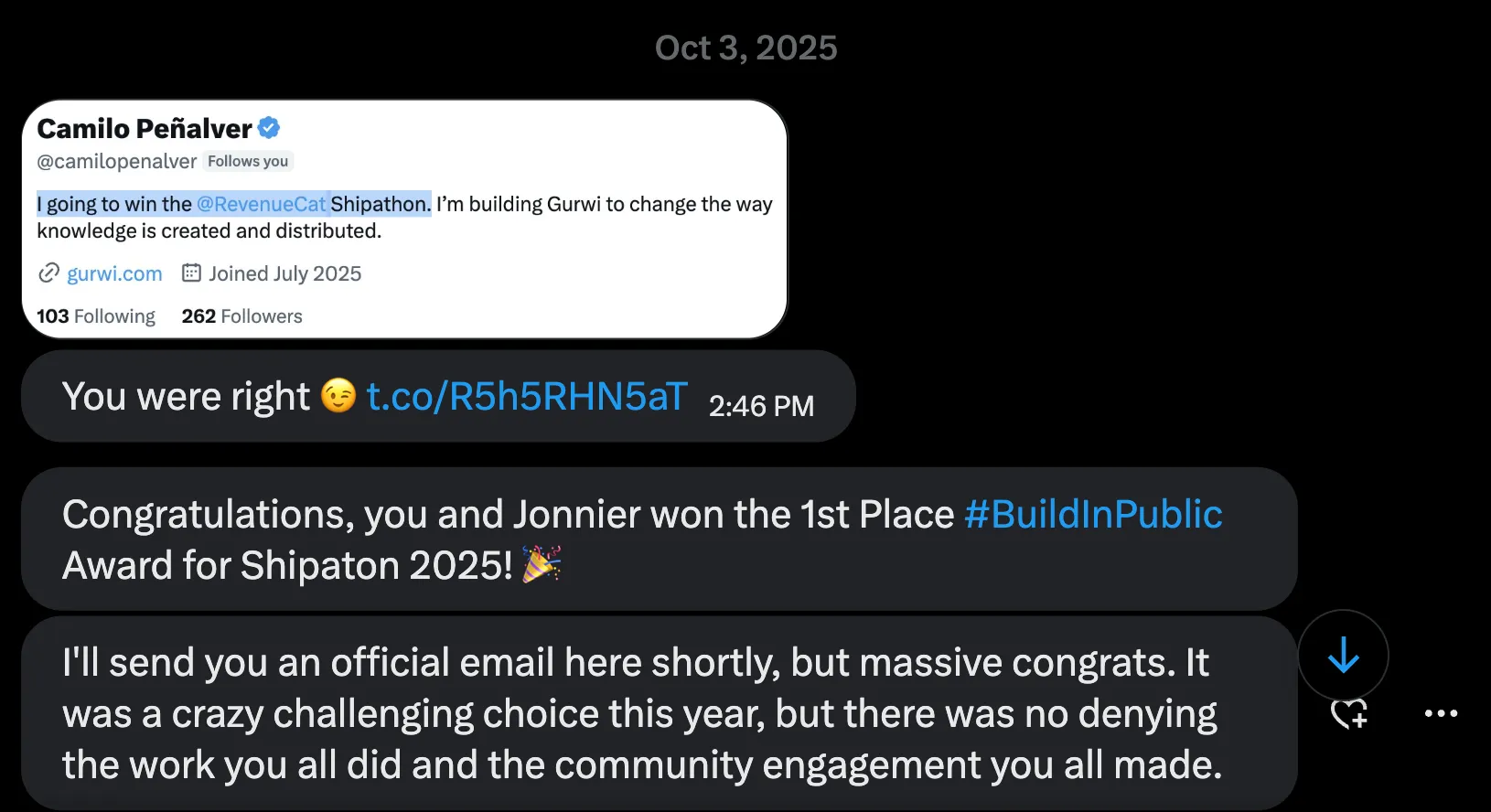
Then came October 3: Charlie Chapman writes to me and tells me that we won the Shipaton, first place in the Build in Public category. He writes to me in advance, because the prize included traveling to New York for the awards ceremony on October 14, but someone like me, what visa was I going to have?
That’s where the ordeal of getting it in record time begins, and with it, the other one: the visa. Nobody had any idea whether I could travel. Not me, not Charlie Chapman, not the RevenueCat team in the United States, because for everyone it was a mystery how the whole thing worked in Colombia. Around those days I had posted an Instagram story with a doubt and a complaint that had nothing to do with the visa, but with incorporating a company in the United States as a non-resident. A kid named Benjamín Merino, who defines himself as gay and autistic, answered it, and in that conversation I realized he also knew a lot about visas and immigration, so I asked him to meet and see what could be done about my case. He turned out to be an expert despite his 21 years, and he works on these matters at migraciones.co. He advised me: the process was twofold, first fill out the form and then get the appointment. And the appointment is where people get stuck for months, more than a year, refreshing the page as if gold were going to come out of it. We refreshed it all day, until finally one appeared, for Thursday.
On the day of the appointment a very long line awaited me, hours long. You spend the whole morning on it, and before going you spend your time watching a bunch of videos about what to say and how to behave, as if that were going to help. When my turn finally came, I was glad to see the consul: he was Black, and I thought he’d empathize with me easily. He was absolutely serious throughout the entire interview. For the first three minutes he said nothing to me except whether I spoke English, while he reviewed the letter I had asked the RevenueCat people for and who knows how many things on the internet. And then he did start interviewing me in English. I don’t remember all the questions, but one was how much I earned. And the more time passed, the more I thought it was going worse, that they weren’t going to give it to me. He got up and left for a couple of minutes, and when he came back he told me, all in English: congratulations, your visa has been approved. I asked him, Mr. Consul, this trip is on Tuesday, is there anything that can be done so that the passport with the visa arrives faster? Because you hand over your passport at the interview, and what you wait for is to get it back with the visa stamped. And he answered bluntly: the visa process is the visa process. I said ok, thank you. And even so, I went on with the hope of making it, without a pickup appointment, going to the office where they deliver passports to see if I got lucky and what could be done. And you never know what they’ll give you when they approve your visa, whether three months, a single entry, a limited number of times. They gave it to me for ten years, unlimited, B1 and B2, when I had only asked for the business one, I think, because sometimes they upgrade your visa and give you a better one. But I had to leave no later than Tuesday and the visa wasn’t going to be ready in time: Monday was a holiday in Colombia and the embassy doesn’t work. It didn’t arrive in time. The awards ceremony was on October 14 and I watched it from here.
The Shipaton awards ceremony, October 14, 2025
The RevenueCat Shipaton put the app on a Times Square screen in New York for a couple of days and gave us $15,000 dollars in cash, the starting capital we always dreamed of having and that our country had denied us.

After winning I published a video announcing the victory, and it was thanks to that video that the journalist from La W, Brenda Barbosa, who found it on Instagram, passed my case on to Julio Sánchez Cristo. She didn’t follow me and I didn’t know her at all: she simply came across the video while browsing social media. Julio, with that, got excited and wrote to me on WhatsApp to ask a couple of questions. Then he published the video talking about the project, which surpassed 800,000 views.
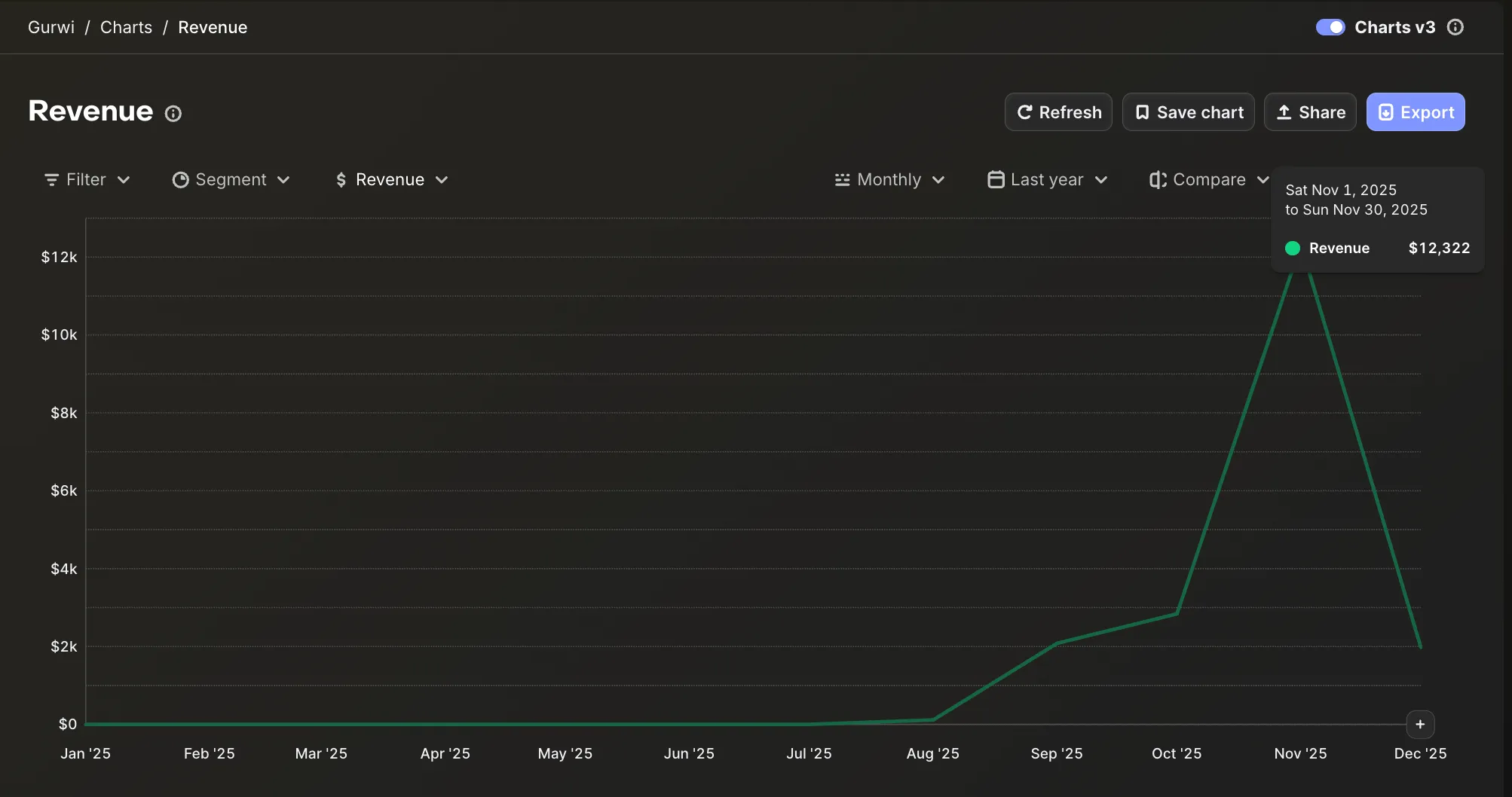
With all this impact, Gurwi achieved more than $19,000 dollars in sales in 2025 and more than 1,300 reviews with an average rating of 4.8 stars, despite still being a project of promises, with only 5 classes and a lot, but a lot, left to do. And since I knew it perfectly well, I couldn’t enjoy the victory, beyond the deep, enormous relief of not stacking up another defeat. Although it must be clarified that that figure is what users paid and not what went into our pockets, because from each sale the app stores keep their commission, which in our case is 15%.
We incorporated an LLC in the United States that today is called Gurwi LLC. And in the time that has passed since then, we finally achieved the dream we once made for ourselves: that Gurwi would create classes and courses with a single prompt. Because that’s what we really wanted to create, and with success came a lot of responsibility, after three great failures in which I thought I was going to change things and I didn’t. We had a ton of bottlenecks, starting with image generation, and to overcome them we had to change the entire Gurwi format and the entire editor we had built, until we achieved what we’ve achieved. That’s what today allows us to bet on hyperpersonalized education, in which people learn from what interests them, be it the strangest topic in the world, be it the perspective from which they can best understand it.
Since this was agentic, we tried many agent development frameworks. And one of the biggest inspirations came from where I least expected it: watching my girlfriend register her income and expenses in WhatsApp to later download the CSV and pass it to ChatGPT. Seeing what she was trying to do made me imagine everything agents could truly offer, and I told her she didn’t need to do all that, that I could make her an app. In the end that was what agents were, and I believed I could build it in a month. It didn’t take me a month: it took almost nine months until we could launch Clatri, the agent to manage money, health and life, the three things that people like me have always let slip away, and publish its first marketing video at the end of July 2026.
I’ve finished the most technically complex part, though not everything, because software is never finished: it always iterates and improves. That lets me focus above all on Clatri’s distribution, which right now has the best B2C outlook. Gurwi, on the other hand, requires more investment: we have to grow its class catalog and keep strategies like custom product pages on specific topics, so that when someone searches about learning history, for example, they find Gurwi. But there’s also great interest in Gurwi as B2B, because our technology can help companies create and publish their own educational content, as I explained in this LinkedIn post.
Things are still difficult, but much more fortunate than before. And I still haven’t achieved even half of half of what I’m going to achieve, because I don’t want to be one more promise that stayed a promise.
I try to build a company because it’s the way I have to claim the land I wasn’t born into, to have something in a world that denies people like me everything. Becoming a success story is challenging the social and economic structures that, in a country and a region with low and sometimes zero social mobility, condemn us to die as we were born.